Our Rescue License
Trust, compassion, and accountability are part of every life we help protect.
Information On Rescue License
Why Rescue Licensing Matters
New York State Agriculture & Markets Law — Article 26-C
Animal rescue should mean more than saving lives. It should mean protecting them every step of the way.
In New York State, Article 26-C of the Agriculture & Markets Law establishes licensing requirements and minimum standards for qualifying animal shelters and rescue organizations that care for dogs and cats awaiting adoption. This law was created to strengthen animal welfare protections, improve oversight, and promote responsible practices throughout the rescue community.
A rescue license is not simply a certificate or identification number. It is part of a statewide regulatory framework designed to help ensure that animals receive appropriate care while they are waiting for their forever homes.
What Does a Rescue License Mean?
A New York State animal shelter license is issued through the New York State Department of Agriculture and Markets. Organizations covered by Article 26-C must meet applicable licensing requirements and comply with the law's standards for animal care and shelter operations.
These standards address important areas, including:
- Veterinary care: Written protocols for examinations, vaccinations, parasite control, emergency treatment, and other essential medical needs.
- Safe housing and sanitation: Requirements intended to protect animals from injury, unsafe conditions, and the spread of infectious disease.
- Proper nutrition and daily care: Standards addressing food, clean drinking water, husbandry, and animal well-being.
- Recordkeeping and accountability: Individual animal records documenting intake, placement, medical care, and other important information.
- Staff and volunteer training: Training requirements covering humane handling, infectious diseases, sanitation, animal behavior, and documentation.
- Oversight and inspections: State inspections, including inspections before licensing and annual inspections associated with license renewal, with additional unannounced inspections possible under the law.
These requirements help establish consistent expectations for organizations entrusted with the lives of vulnerable animals.
How Does Article 26-C Positively Impact Animals?
Before an animal reaches an adoptive home, it may have already experienced abandonment, illness, neglect, or significant stress. Its time in rescue should be a period of healing, safety, and preparation for a better life.
Article 26-C strengthens the protections surrounding that process in several important ways.
1. Higher standards of care
Rescues covered by the law must follow applicable standards for housing, sanitation, nutrition, veterinary care, and animal management. These requirements help reduce preventable risks and support healthier outcomes for animals.
2. Greater accountability
Required records, established procedures, and state oversight help create a system in which animal care practices can be evaluated and deficiencies addressed.
3. Better protection against disease and unsafe conditions
Sanitation requirements, veterinary protocols, and disease-control procedures help reduce the risk of infectious disease spreading among animals in care.
4. More informed and responsible placements
Animal records and required disclosures help preserve important information about an animal's history and care. This supports more informed decisions by adopters and organizations involved in transfers.
5. Greater public confidence
When the public can verify that an organization is licensed, people have an additional way to confirm that the rescue operates within New York's regulatory framework. Licensing supports transparency and helps adopters make more informed decisions about whom they trust with an animal's care.
Is Every Animal Rescue Required to Have a License?
New York State law requires organizations that fall within the applicable licensing provisions of Article 26-C to obtain and maintain the required animal shelter license. This includes qualifying nonprofit rescue organizations that care for dogs or cats and make them available for adoption.
However, the law contains specific definitions, eligibility requirements, and exceptions. Not every person who informally helps an animal or every animal-related organization necessarily falls under the same licensing requirement.
For organizations that are covered by the law, operating a rescue is not a substitute for complying with the state's licensing requirements. Compassion and good intentions are important, but they do not replace legal obligations.
The law also requires licensed organizations to prominently display their Pet Dealer Exemption Identification Number on their websites and public-facing publications or advertisements. This allows members of the public to identify the organization's state-issued number and check it against available state records.
Our Commitment to Responsible Rescue
At The Silent Prayer, INC., we believe that saving an animal is only the beginning of our responsibility. Every animal deserves safe housing, appropriate medical care, compassion, and the opportunity to find a loving, permanent home.
We believe in transparency, accountability, and responsible rescue practices. We also believe that the public deserves to understand the protections established by New York State law and why those protections matter.
A rescue license does not mean that an organization is perfect, nor does it eliminate the possibility of problems. It does, however, establish an important regulatory framework with defined standards and mechanisms for oversight.
Every animal deserves more than a promise. Every animal deserves protection.
That is why rescue licensing matters — and why responsible rescue must always put animal welfare first.
Learn More
Read the official New York State Agriculture & Markets Law, Article 26-C, Regulation of Animal Shelters:
Official Article 26-C information
You can also consult the state's public listing of licensed pet rescues and shelters:
New York State Shelter Rescue License
The Silent Prayer is licensed by the New York State Department of Agriculture and Markets as a shelter rescue.
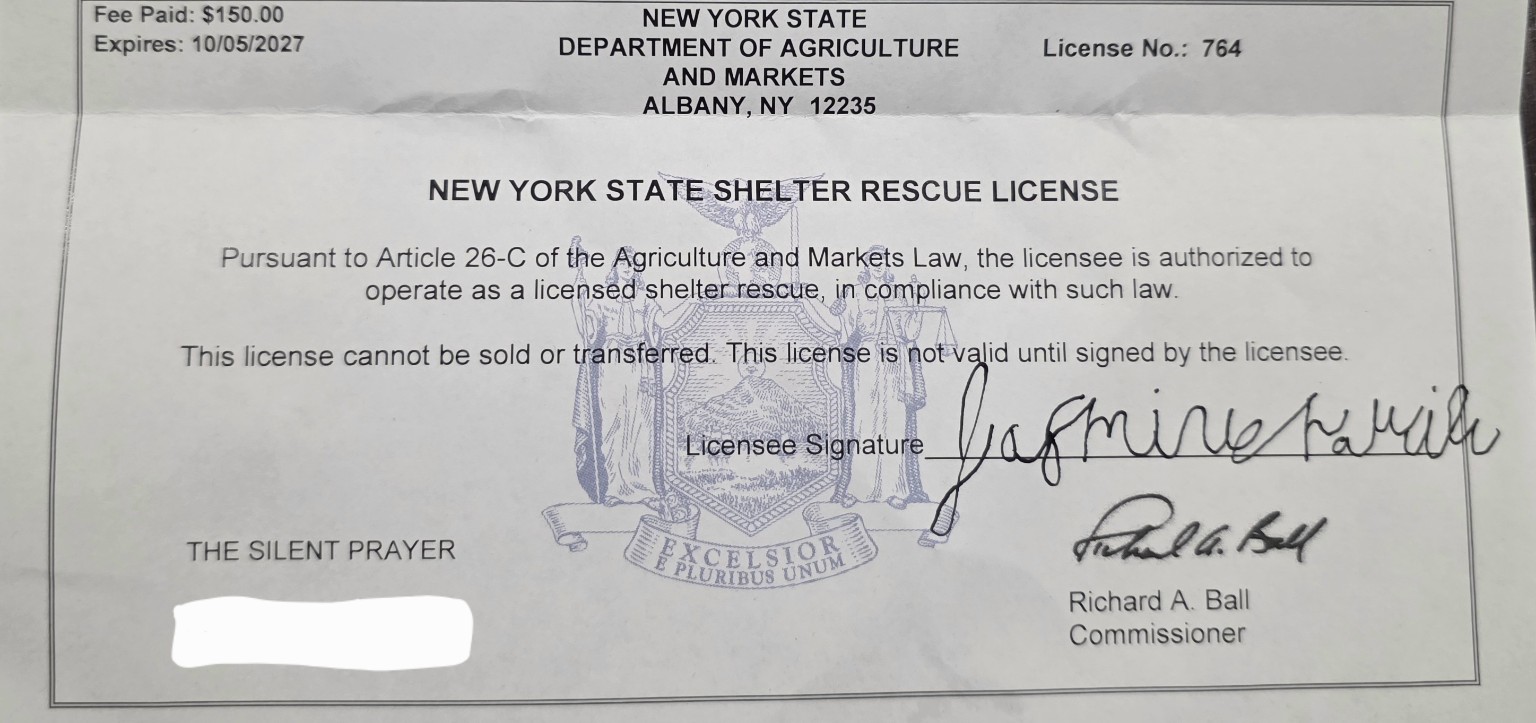
Original license document. Select the image to open it at full size.